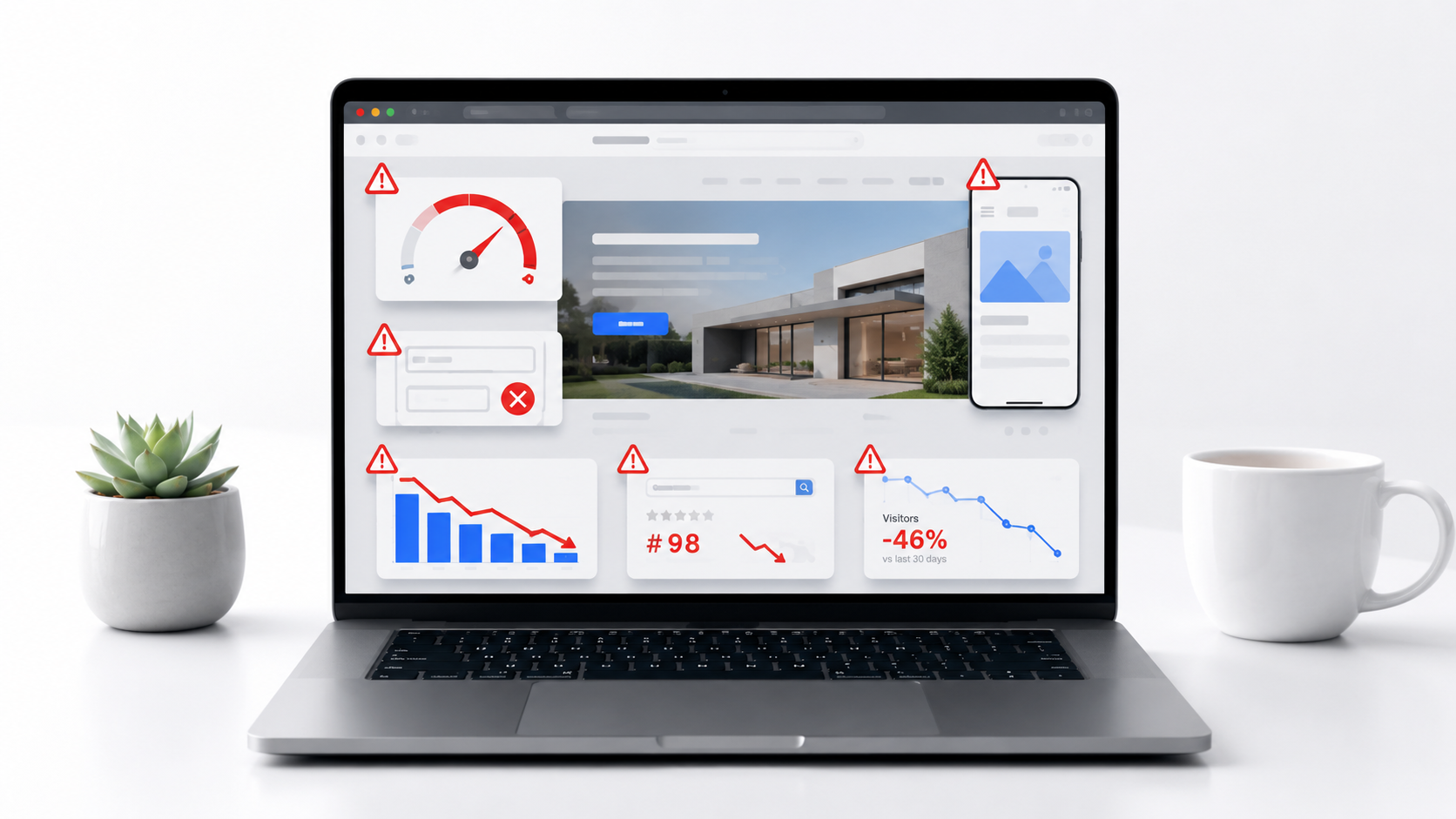
When a website is slow, owners tend to file it under "technical stuff my web person handles." That is the wrong drawer. Speed is not a tech vanity metric. It is a money issue, because a slow site loses customers before they ever see what you sell, and it does it silently. You never meet the person who tapped your link, waited, and gave up.
So let us answer the real question plainly, and then talk about why it matters for a business on the North Shore.
How fast is fast enough
The short answer: your pages should load in under three seconds on a phone, and closer to two is better. Google's own guideline is that the main content of a page should appear within about 2.5 seconds to count as good. That is the bar. Anything much beyond three seconds and you are actively shedding visitors.
Why the phone standard and not the desktop? Because that is how your customers actually find you. Someone searching "tire shop near me" while parked in Peabody is on a cellular connection, not office wifi. If your site is only fast on a fast connection, it is slow where it counts.
What slow actually costs you
The numbers here are stark. More than half of mobile visitors abandon a page that takes longer than three seconds to load. That is not half of a rounding error, that is half of everyone who was interested enough to click. Every second of delay past that point sheds more of them.
And it hits you twice. Beyond the visitors who leave, Google uses page speed as a ranking factor, so a slow site also ranks lower, which means fewer people find it in the first place. You lose customers at the front door and at the search results. Slow is expensive in two directions at once.
A slow website is a store with a door that sticks. Some people will wrestle it open. Most will just walk to the shop next door where the door swings right open.
Why sites end up slow
The good news is that slow is usually caused by a handful of boring, fixable things, not some deep flaw.
- Huge images. Photos straight off a phone camera are far larger than a web page needs. Unoptimized images are the single most common cause of a slow site.
- Cheap or overloaded hosting. Bargain hosting crams many sites onto one tired server. You feel it as lag on every page.
- Bloat. Heavy themes and a pile of plugins each add code that has to load, and it adds up fast.
- No caching. Without caching, your site rebuilds every page from scratch for every visitor instead of serving a ready-made copy.
Most slow small business sites are slow for these reasons, which means the fix is often a focused cleanup, not a ground-up rebuild.
How to know where you stand
You do not have to guess. Free tools will grade your speed, but the simplest test is to open your own site on your phone, on cellular, and count. If you are tapping your foot before your homepage finishes, so is every customer. That gut check is more honest than any score.
Making it fast and keeping it that way
Speed is not a one-time fix, because images pile up and software drifts. It needs the occasional tune-up to stay fast. That ongoing attention to performance is a core part of what we do, and you can read how we approach it on our performance and SEO page. We treat a fast site as the baseline, not a luxury.
If your site feels sluggish and you want to know exactly what is dragging it down, book a call and we will run it through the tests with you and tell you what is worth fixing.