Short answer: you update a website without losing your Google rankings by doing it in phases — modernizing the machinery underneath first while leaving what Google already trusts alone, then improving the design and SEO once things have settled. Rushing it all at once is how businesses lose rankings they spent years earning.
Here's a situation we run into a lot with established North Shore businesses: the website is old. Really old. But it works — it's number one on Google for the searches that bring in customers, and it's been that way for years.
So the owner is stuck. Modernizing feels risky. Doing nothing feels risky too. Which is exactly the right instinct, because both are risky if handled carelessly.
Why old websites eventually have to be updated
Even a site that ranks well has an expiration date. The technology it's built on ages, and eventually:
- Security gets shaky — older systems stop getting updates, which is how sites get hacked.
- Nothing new can be added — simple changes turn into expensive, fragile projects.
- Speed and mobile suffer, and Google increasingly cares about both.
- Fewer people can work on it — if the only person who understands it disappears, you're stranded.
Ignoring it doesn't avoid the problem. It just guarantees you'll deal with it on a bad day instead of a good one.
The part most owners don't realize: a website has two halves
Think of your website like a building. There's the part customers see — the paint, the layout, the sign out front. And there's the part nobody sees: the wiring, the plumbing, the foundation.
The visible half is your design. The hidden half is the machinery that actually makes the site run.
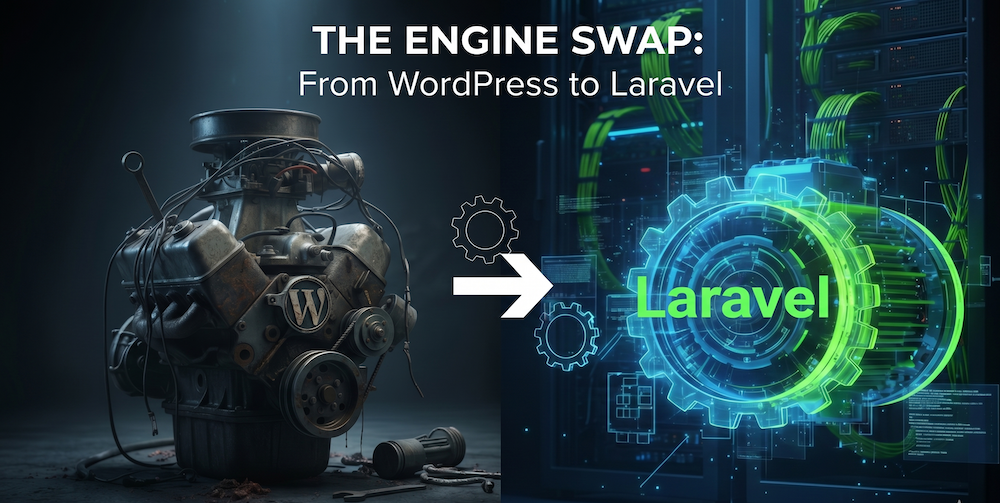
Here's the key insight: you can replace the wiring without repainting the walls. And when a site is already ranking well, that's often exactly what you should do first — because Google has spent years learning to trust what's on the surface. Change everything at once and you're asking it to re-evaluate you from scratch.
What this looks like in practice
Picture an established local shop with a website built over a decade ago on technology that has simply aged out, yet still ranking for the searches that bring in customers. The smart move is not a risky all-at-once rebuild.
Instead, you rebuild the entire hidden half first — modern, secure, maintainable machinery underneath — while deliberately keeping the front end that customers and Google already know. To a visitor, almost nothing looks different. Underneath, it's an entirely new website.
That's phase one. A refreshed design and expanded SEO work come next, once things have settled and the rankings are confirmed to have held.
Why the phased approach matters
Doing it in stages does two things a single big-bang redesign can't:
- It isolates the risk. If something shifts, you know which change caused it, because you only changed one thing.
- It gives Google time to catch up. Search engines re-crawl and re-evaluate gradually. Space out the changes and you get to watch the results instead of guessing.
Slower on paper. Far safer in practice — especially when your rankings are already making you money.
Why who does this actually matters
This is the kind of work where experience shows up in what doesn't happen. Anyone can build a new website. Rebuilding the engine of a working one without disturbing what's already ranking takes someone who understands how the pieces underneath fit together, and what Google notices when they move.
If your site is old but still earning its keep, that's worth protecting. Our SEO and AI search optimization work starts from exactly this principle: understand what's already working before changing anything.
Frequently asked questions
Will updating my website hurt my Google rankings? It can, if it's done carelessly. Changing everything at once asks Google to re-evaluate your site from scratch. A phased approach that protects what's already working greatly reduces that risk.
What does modernizing the backend of a website mean? It means replacing the hidden machinery that runs your site — the wiring and plumbing, not the paint. It makes the site secure, faster to update, and able to grow, often without visibly changing the design.
Why not just redesign everything at once? Because if rankings shift, you won't know which change caused it. Doing it in phases isolates risk and lets you confirm each step before moving on.
My site is old but ranks well. Should I leave it alone? Not indefinitely. Aging technology becomes a security and maintenance problem over time. The safer path is modernizing deliberately, in stages, before something forces your hand.
Have an older website that still brings in business and want to modernize it safely? Book a quick call — no pressure, no obligation.