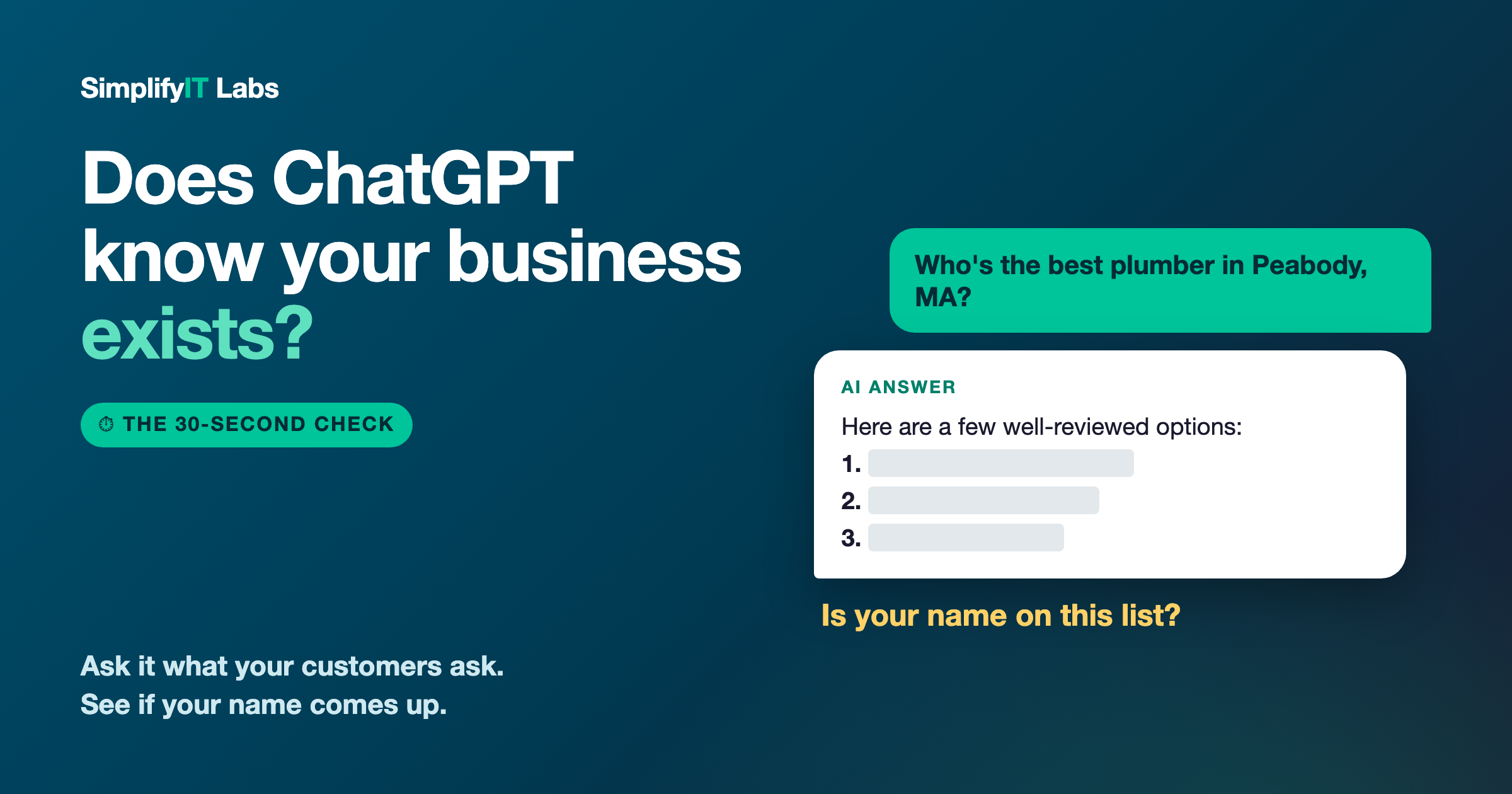
A few years ago, a customer in Swampscott looking for a bookkeeper would open Google, scan a list of links, and click a few. Today a growing number of them open ChatGPT, or read the AI answer that sits at the top of Google, and ask a plain question: "who is a good bookkeeper near me?" Then they act on whatever the AI says. No list, no scrolling, just one answer.
That shift has a name, and it is worth understanding, because it changes what it takes to get found. It is called AEO.
AEO in plain English
AEO stands for answer engine optimization. Where traditional SEO is about ranking in a list of links, AEO is about being the business the answer engine actually names when it responds. The goal is not to be result number four. The goal is to be the recommendation.
Think of the difference this way. SEO gets you into the lineup. AEO gets you called off the bench and put in the game. When someone asks an AI for the best coffee roaster in Beverly or a reliable electrician in Danvers, either your business comes up in that answer or it does not, and there is no second page to save you.
Why this matters now, not later
AI answers are no longer a novelty. They sit at the top of ordinary Google searches, they power the assistants built into phones, and millions of people now start with ChatGPT instead of a search box. When the answer is a single paragraph instead of ten links, the businesses that get mentioned capture the attention, and the ones that do not become invisible in a way they never were before.
For a small local business, that is both a risk and an opening. The risk is being left out of the answer entirely. The opening is that most of your local competitors have not adjusted for this yet, so the businesses that move early get quoted while everyone else is still optimizing for a list that fewer people read.
How AI decides who to quote
Answer engines are trying to give a confident, correct, specific answer. To do that they favor sources that make the answer easy to lift. In practice that means a few things.
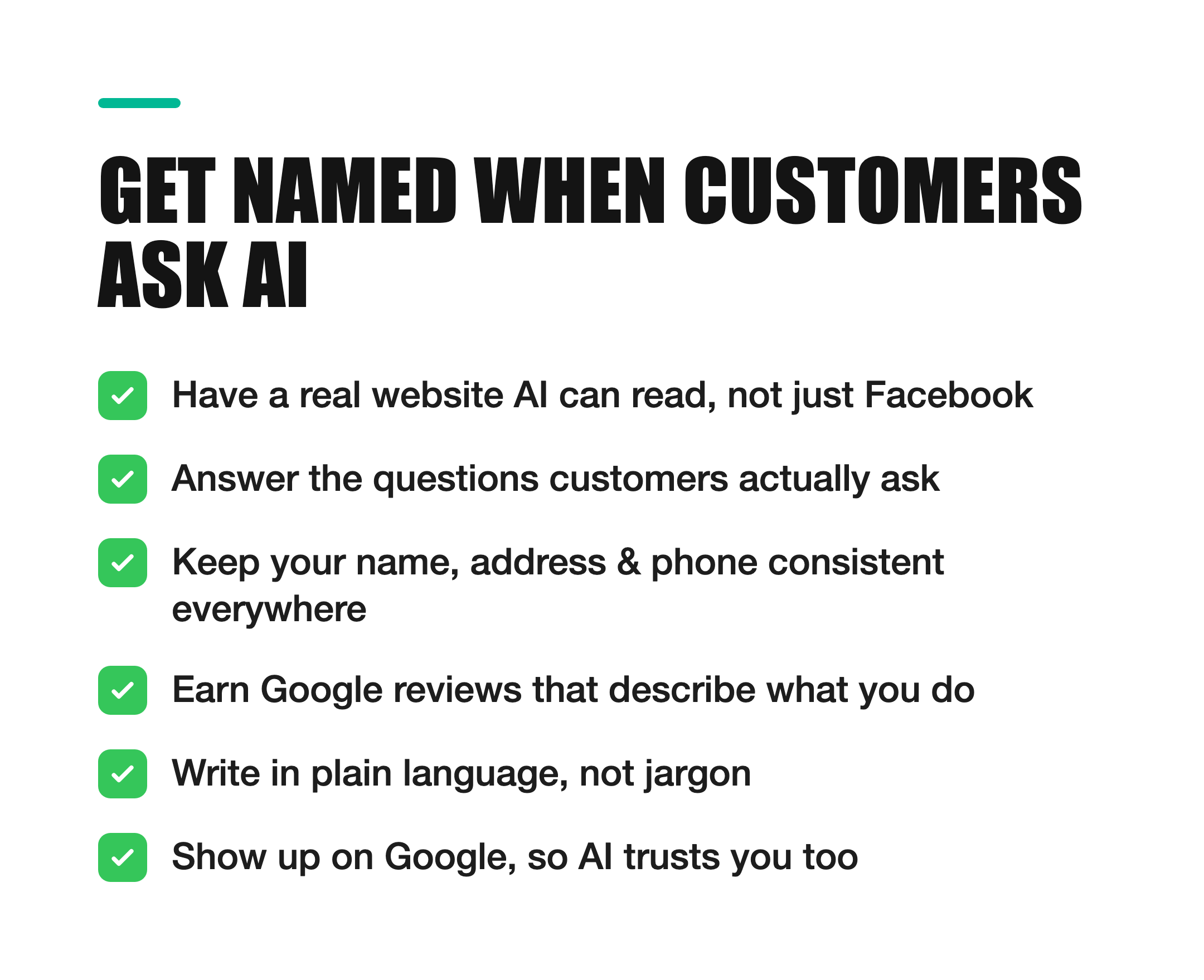
- Clear answers to real questions. Content written the way a customer actually asks, in plain language, gets pulled far more often than marketing fluff.
- Structure the machine can read. Question-and-answer sections, clean headings, and schema markup tell the AI exactly what each part of your page means.
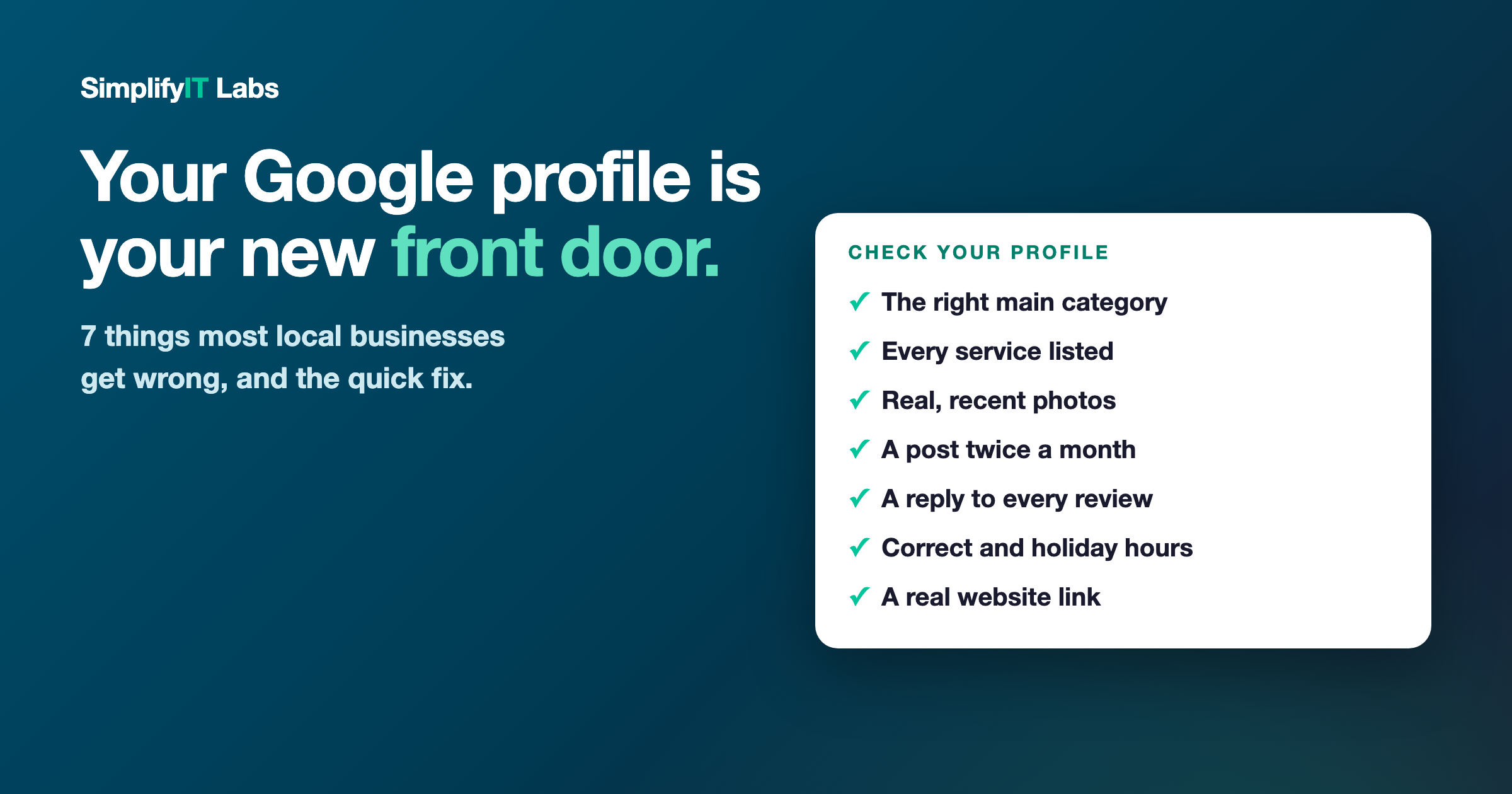
- Consistency everywhere. If your name, address, phone, and hours match across your site, Google Business Profile, and directories, the AI trusts the data. If they conflict, it hesitates.
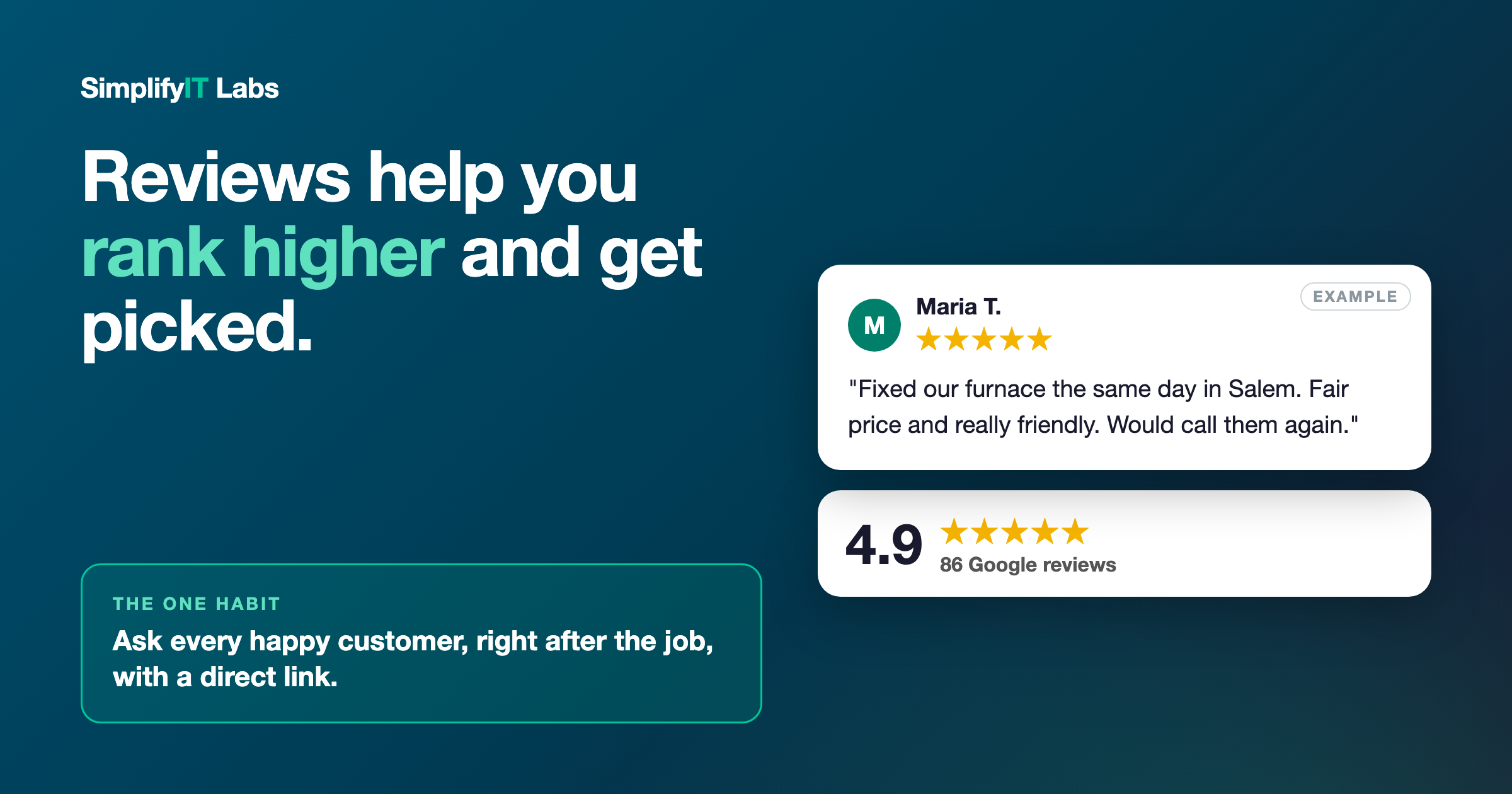
- Genuine local trust. Reviews, mentions from other local sources, and a real presence tied to a real place all tell the AI you are a legitimate business in that town.
What this looks like for your site
You do not need to chase the technology. You need to make your business the clearest, most trustworthy answer to the questions your customers ask. That means writing pages that answer those questions directly, adding FAQ and local business schema so the structure is machine readable, tightening up your business details so they match everywhere, and keeping the whole thing current. Done right, the same work that helps an AI quote you also makes the page better for the human who reads it.
This is exactly the work we focus on for North Shore businesses, and we have watched it move clients from invisible to quoted. You can see how we approach it on our performance and SEO page.
If you want to know whether your business currently shows up when people ask AI for a recommendation in your town, book a call and we will check it with you, in plain English.